
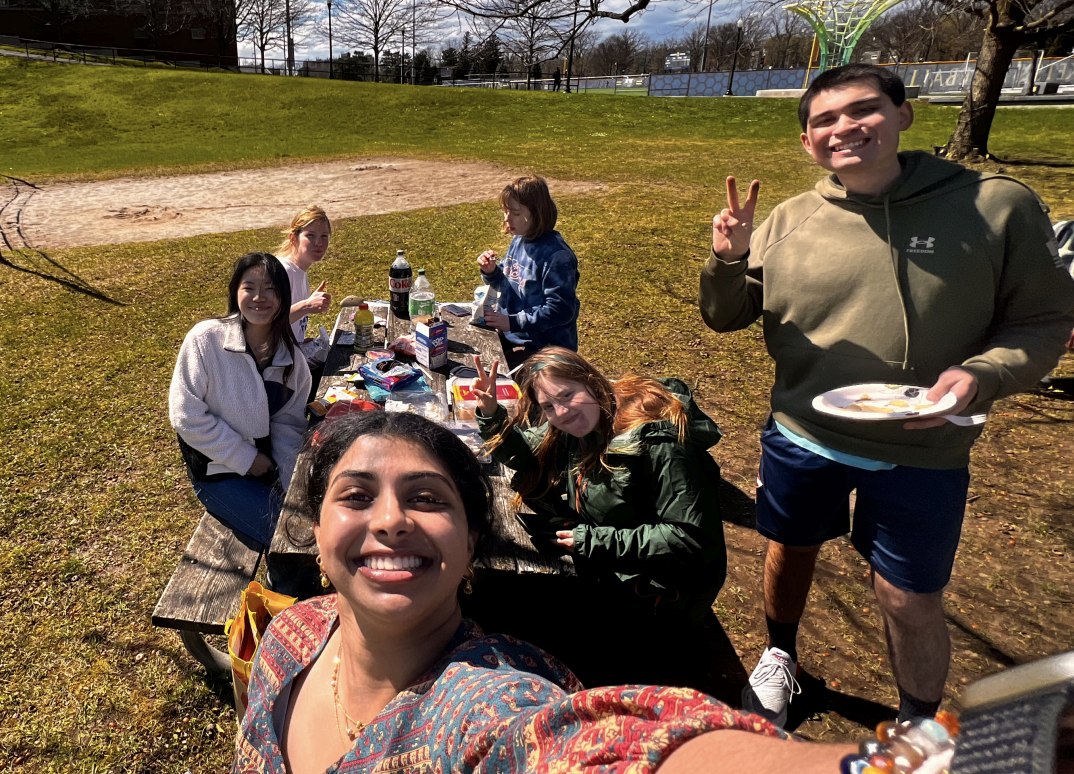
Is one of your biggest concerns how to make friends in college? You aren’t alone. Every college student hopes to find their people, friends they can comfortably confide in and enjoy spending time with. Keep reading to learn from real University of Rochester students about their experiences making friends during college.
Have a positive outlook on making friends
If you go into your college experience believing you won’t make friends, it may feel harder to build meaningful connections. But when you believe friendships will come and you put in the effort, you’re much more likely to leave college with strong and fulfilling relationships. “When I was a freshman, I was really nervous about making friends at Rochester,” said Mapalo Kasapo, a junior majoring in computational biology. “But I believed I would eventually find my people, and that positive mindset helped me meet some amazing friends.”
Even if you didn’t have a large friend group in high school, college offers a fresh start. “This is a new chapter, and you get to shape your own college experience,” said Zahra, a junior neuroscience major.
Be present
It’s easy to fall into the habit of scrolling on your phone especially while waiting for class to start or walking across campus. Challenge yourself to stay present and aware of the people around you. For Silence Mpikula, a sophomore studying data science and finance, being present made a big difference. “When you’re not constantly on your phone, people feel more comfortable starting conversations,” they shared. “Even small interactions before class can turn into real friendships.”
Remember you aren’t alone
Whether you’re introverted or extroverted, making new friends in college can feel intimidating at first. Many students worry about how they’ll be perceived when starting conversations. What helps is realizing that almost everyone feels the same way. Most first-year students are looking around hoping someone else will say hello first. Understanding that shared nervousness can make it easier to put yourself out there and start conversations. Eva Hu, a freshman studying chemical engineering, shared that realizing everyone else was also nervous made it easier for her to start conversations during her first weeks on campus.
Leave your comfort zone
One of the most important steps in learning how to make friends in college is being willing to take small risks. That might mean attending an event alone, joining a club where you don’t know anyone, or introducing yourself to someone sitting next to you.
Leaving your dorm room and getting involved is often the first and easiest step toward building friendships, even when you don’t feel like it. Being open to meeting new people and initiating conversations creates opportunities for meaningful connections. Albert, a sophomore studying computer science and business, said that joining student organizations early helped him meet people outside his classes and quickly expand his social circle.
Put in the work
Friendship takes effort from both people involved. Strong relationships grow through shared time and experiences.
Try organizing casual hangouts like study sessions at Rush Rhees Library, coffee meetups at campus Starbucks, or movie nights with classmates. Even studying together before exams can strengthen connections. Mafatim, a junior studying finance, explained that scheduling regular study meetups helped turn classmates into close friends over time. Balancing academics and involvement can be challenging, but intentionally making time for friendships helps relationships grow and last.
Be the friend you want
Making the first move in a friendship can feel uncomfortable, but waiting for others to approach you doesn’t always work. Treat others the way you would want to be treated with openness and kindness.
Invite classmates to join you for meals, include new people in group plans, and stay open to expanding your circle.
Let your friends increase your connections
When you make one friend, you often gain opportunities to meet their friends as well. Friend groups naturally grow when people introduce each other and build community together. Students like Mapalo and Zahra noted that many of their closest friendships came from meeting friends-of-friends through shared activities and campus events. Don’t be afraid to mix friend groups or attend gatherings where you may not know everyone yet. Expanding your network helps colleges feel smaller and more connected. Be yourself Whether you’re meeting someone in your residence hall, collaborating with classmates, or joining a student organization, authenticity matters. Trying to be someone you’re not can make friendships feel forced. Being genuine allows you to attract people who appreciate you for who you truly are. The right friendships develop naturally when you feel comfortable being yourself.
Where to make friends
There are many places at the University of Rochester where friendships naturally form. Students recommend:
-
- Orientation – One of your first opportunities to meet people. Focus on forming a few meaningful connections rather than trying to meet everyone.
- Welcome Week events – The beginning of the semester is filled with social activities designed to help students connect.
- On-campus jobs – Working alongside other students creates consistent interaction and shared experiences.
- Classes – Talk with classmates before or after lectures and suggest studying together.
- Campus events – Check university calendars, student organization pages, and campus announcements for activities happening throughout the semester.
Student organizations – Clubs are one of the best ways to meet people who share your interests. - Residence halls – Keeping your door open and introducing yourself to neighbors can lead to lasting friendships.
- Dining halls – Don’t hesitate to sit with someone new or invite someone eating alone to join you.
Make lifelong friends at URochester
Hopefully, these tips help shift your mindset from “I can’t make friends in college” to “I can make friends at the University of Rochester.” Building friendships takes time and practice, so if connections don’t happen immediately, don’t get discouraged. Keep showing up, staying open, and putting yourself out there, it truly does get easier.