
When finalizing my college decisions, URochester’s research resources were a major pull in shaping my eventual decision to commit. I’d been lucky enough to do a bit of neuroscience research during high school and knew I wanted to continue it in some form at university, yet I wasn’t sure precisely how.
With URochester, I was able to showcase this bit of research on my application and eventually received a Research and Innovation Grant upon acceptance to support my future work and the supplemental costs that might incur.
Now, four years and an undergraduate thesis later, I can proudly say I’m significantly more versed in how to complete research at a collegiate level — and a lot more familiar with the resources that support students in doing so.
Specifically, I’d like to introduce to you the Office of Undergraduate Research, a group that aims to support student research opportunities across all academic disciplines.
“Find, fund, share is what we aim to do,” says the office’s program manager Maureen Gabalski. “Taking down barriers for students to get connected to opportunities, and then celebrating them with funding and the symposiums in the spring.”
For starters, the Office of Undergraduate Research supports the Research and Innovation Grant that I received upon acceptance to URochester. In terms of funding, they also manage the Schwartz Discover Grant, which fully funds student summer research on campus, as well as smaller opportunities such as the Barth-Crapsey and Research Presentation Awards.
The Schwartz grant is particularly special for its outreach and accessibility to students on campus: it’s open to anyone regardless of nationality or citizenship. This past summer, 103 students received $6,000 to conduct Rochester-based research, attend a series of professional development talks, and present their work at a session later in October.
The Office of Undergraduate Research also hosts Investigating Research Month in October, which hosts a plethora of sessions to connect students with research opportunities and funding — and support them in taking the leap towards getting involved in the first place. In the spring, it’s followed up with Celebrating Research Week, where students can present via lightning talks, poster expo, or a symposium.
Supporting all of this, the office also works with a group of student research ambassadors (myself included!) to further promote opportunities on and off campus. This year, there’s 53 ambassadors that span across all academic disciplines — including humanities, social sciences, natural sciences, and math/engineering — and serve as a primary contact for students curious in getting involved.
If you’re curious to learn more, here’s a few perspectives on research from the student ambassadors themselves!
Sophie Anderson ’28 (Chemistry)
What department(s)/labs do you research with?
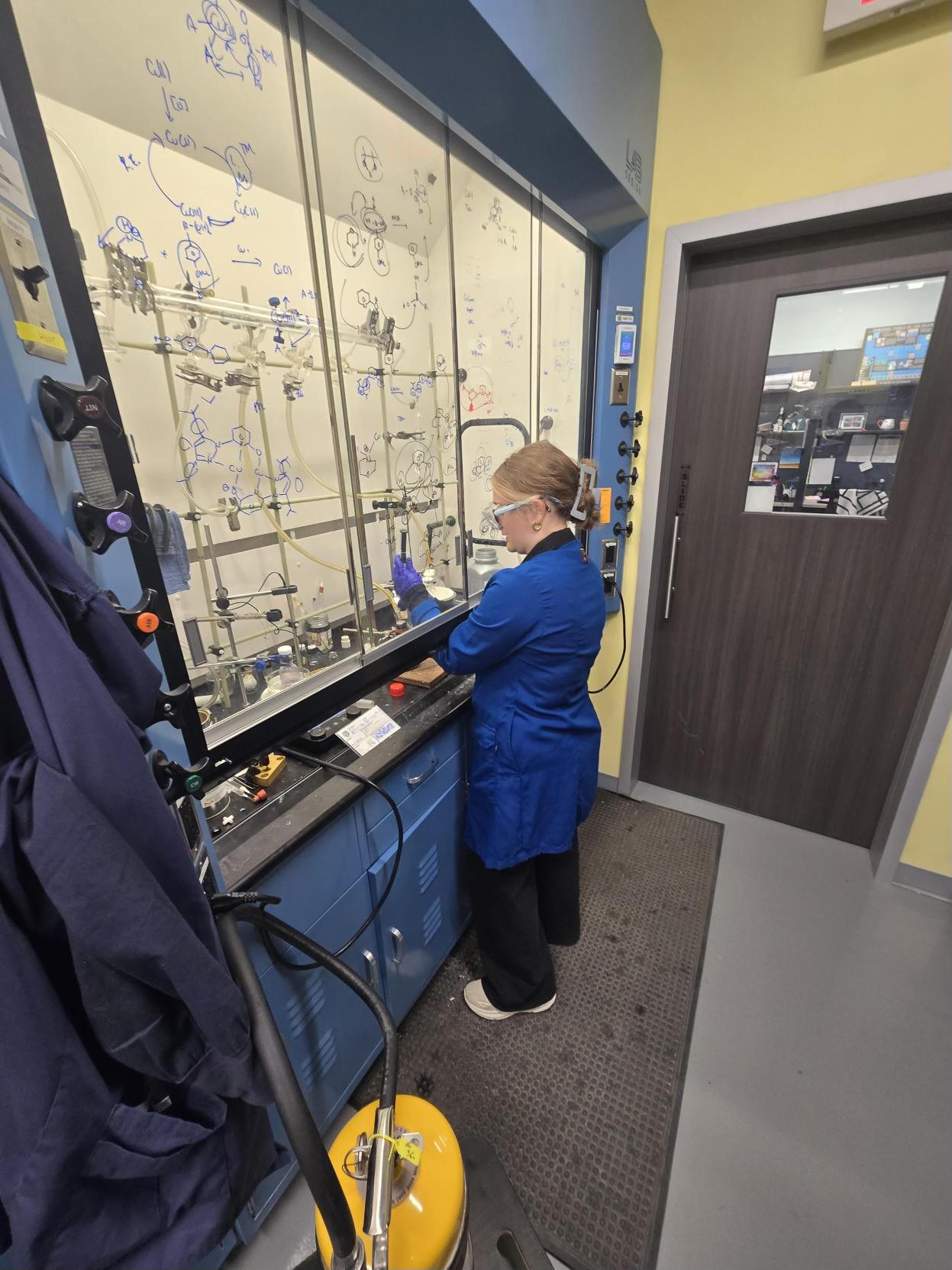
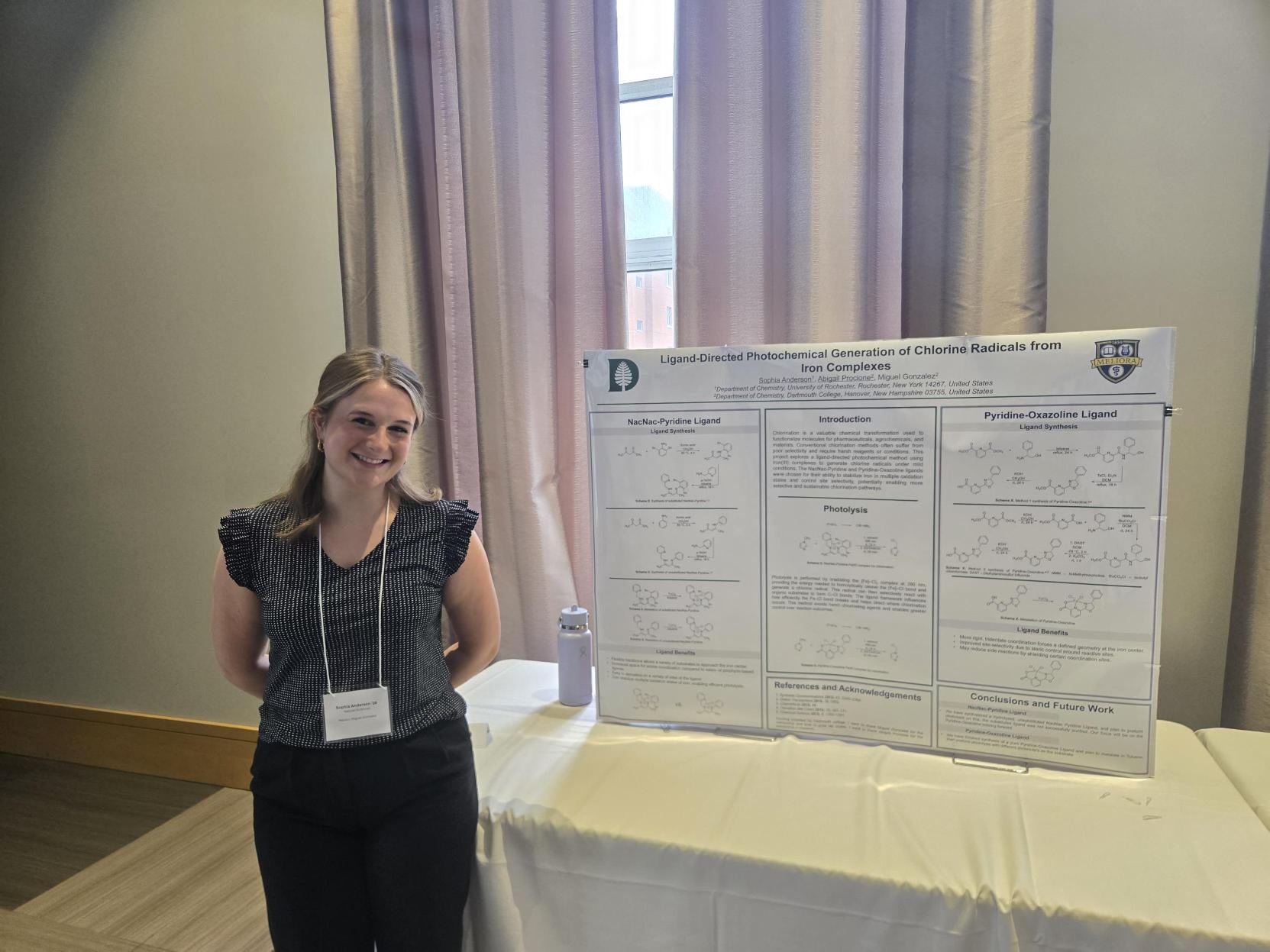
I do research in the Department of Chemistry here on campus with the Kennedy Research Group under the mentorship of Professor C. Rose Kennedy.
What does research look like in your discipline?
In chemistry, my research involves a lot of experimentation, problem-solving, and troubleshooting. In my lab, that means synthesizing compounds, characterizing them using techniques like NMR spectroscopy, and studying how changes in molecular structure affect their properties and reactivity. A lot of research is trial and error, and sometimes experiments don’t go as planned, but that’s also how I learn for future experiments.
What’s the most fulfilling part of your research?
The most fulfilling part is seeing something I’ve spent time working on finally come together. Sometimes a reaction doesn’t work the first time, so troubleshooting, making adjustments, and eventually getting the product you want is really rewarding. I also enjoy being able to connect concepts I’ve learned in chemistry classes to actual research.
Where’s the coolest place your research has taken you?
My research hasn’t taken me anywhere far geographically yet, but it’s given me the opportunity to present my work and connect with other researchers. It’s been really interesting to see how my small part of a project fits into a much bigger scientific picture.
Alex Eggers ’28 (History and Anthropology)
What departments do you research with?
I spent the summer doing research with the anthropology department, but it also involved historical research. Now, I’m doing a new research project with the history department.
What does research look like in your discipline?
In anthropology, there is a mix of fieldwork and archival research. This means that some days, I might be hiding in the archives for hours and the next, I might be at large social events that my interlocutors invited me to.
What projects have you worked on/are you currently working on?
My last project was on food and racial history/impacts in Rochester. I spent the summer researching why food access is such a large problem in the city and where it came from. I also studied people’s reactions to the problem and what their issues were. […] Currently, I’m switching gears to focus more on my history research within the honors program. I’m planning to research transgender lives under the transition from Weimar to Nazi Germany.
What’s a University resource that people looking to do research should know about?
I think more people should know about the McNair Program through the Kearns Center. There are specific criteria for this program (low-income and first-generation college students seeking a PhD in the future), but I always mention it to people, and they’ve never heard of it. This program provides a paid summer research experience and has amazing advisors to help students with grad school applications, research grants, and more. The Kearns Center in general is a great resource even if students are not specifically in the McNair Program.
Laidon Ymeri ’27 (Biomedical Engineering)
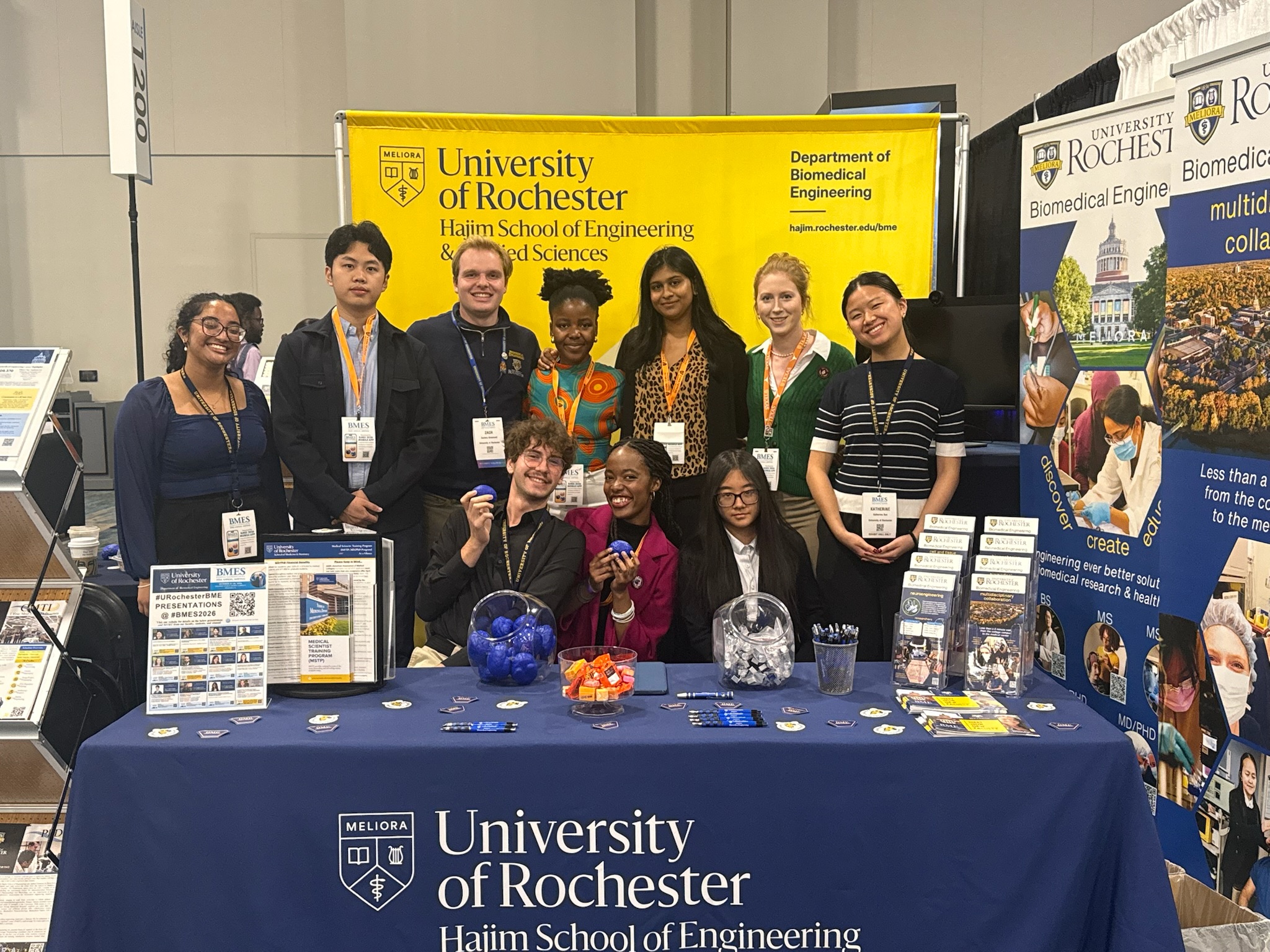
What department(s)/labs do you research with?
I previously worked with the Center for Musculoskeletal Research, and now I conduct research in the Departments of Neuroscience and Otolaryngology.
What does research look like in your discipline?
Research in my discipline can look very different depending on the area or lab you work with. There are both dry and wet labs, and some combine the two. You can also work in clinically focused labs! As a Biomedical Engineer, you can adapt your skill set to almost any medical field you want to focus on!
What projects are you currently working on?
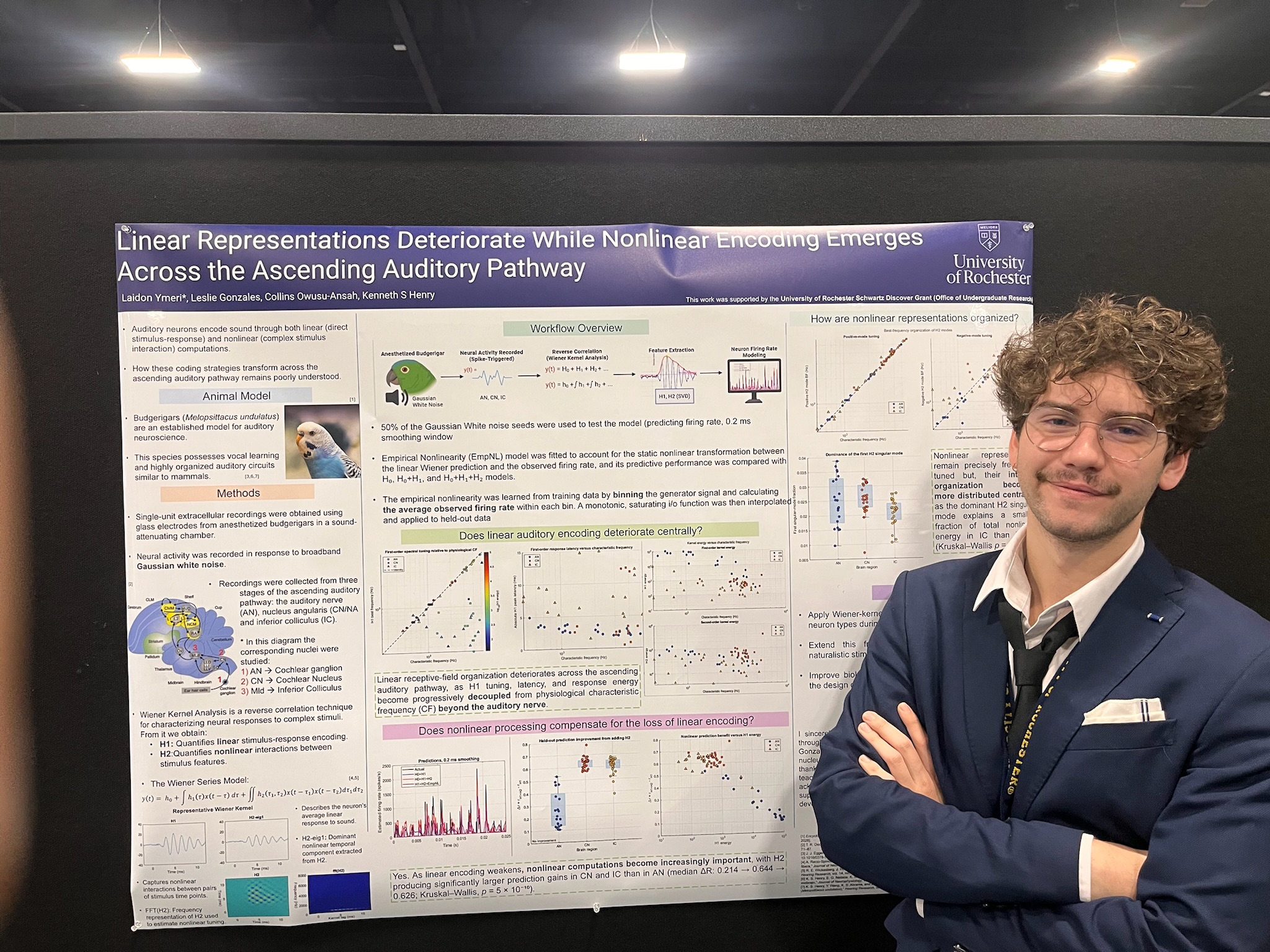
In the Henry Lab, I am currently working on a computational pipeline that analyzes neural responses from the brains of budgerigars, a species of parakeet. By utilizing correlation techniques, we can reveal a lot about how different areas of the brain encode sound into neural activity through linear and/or nonlinear processing.
Tell me a (research-related) fun fact that you think people should know.
One of the coolest things I have learned through my research is that learning to speak a new language with native-like proficiency generally becomes more difficult as we get older, particularly after childhood. This is partly because our brains become less flexible in distinguishing and producing unfamiliar speech sounds, making it harder to master a new language’s pronunciation.
Carly Zubrzycki ’27 (Political Science and Digital Media Studies)
Where do you conduct your research?
The Noll Lab and I’m part of the policy team! However, I also conducted independent research for a few years as a McNair Scholar researching the intersection between art, protest, and public policy.
What does research look like in your discipline?
Research in my disciplines (social science and humanities), looks like a LOT of reading, but also talking to others to learn their perspectives and experiences.
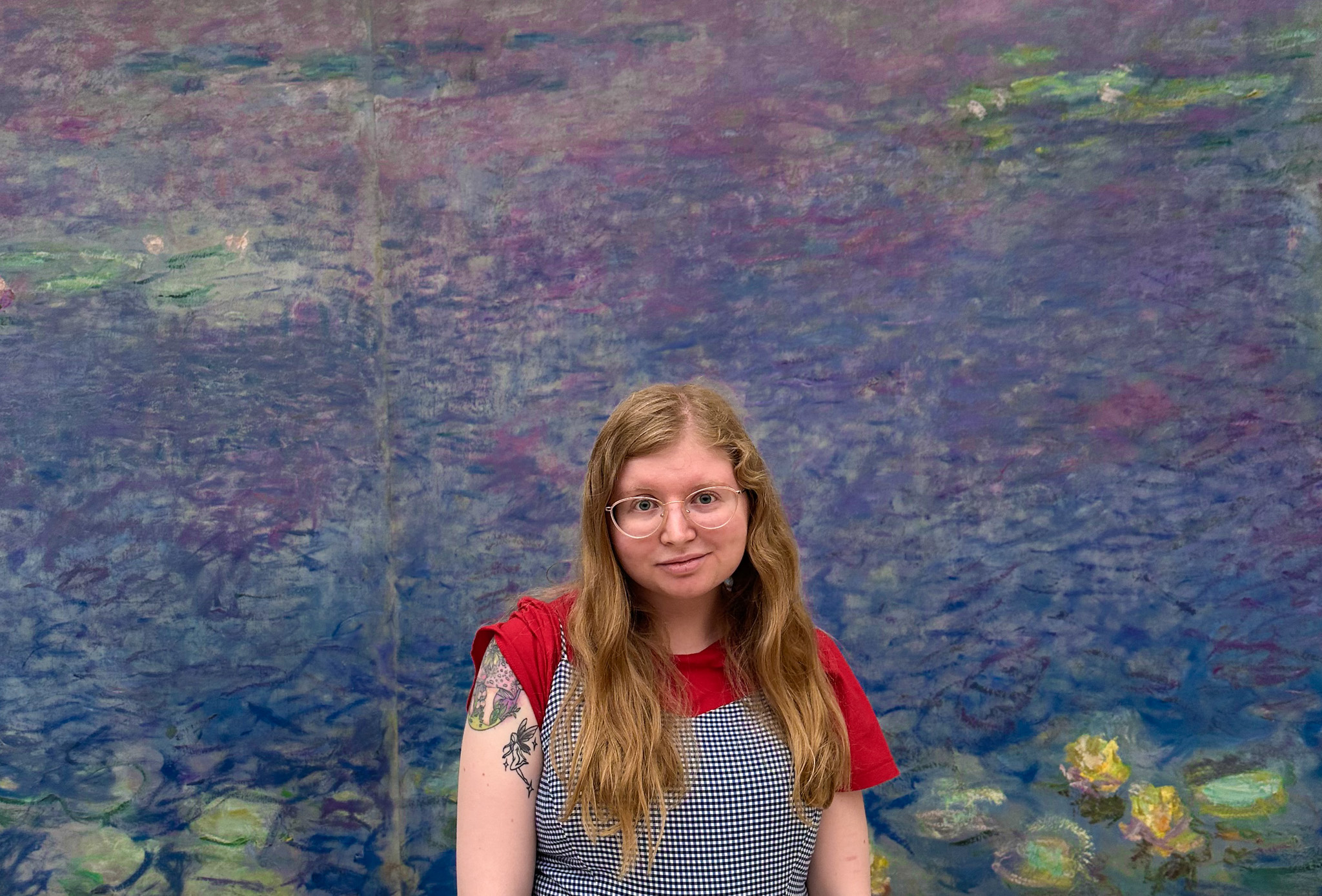
Where do you conduct your research?
The Noll Lab and I’m part of the policy team! However, I also conducted independent research for a few years as a McNair Scholar researching the intersection between art, protest, and public policy.
What does research look like in your discipline?
Research in my disciplines (social science and humanities), looks like a LOT of reading, but also talking to others to learn their perspectives and experiences.
What projects have you worked on/are you currently working on?
In the summer of 2025, I researched the intersection between art and protest as a McNair scholar. To do this, I evaluated AIDS posters from Special Collections and explored how the posters’ design elements influenced activism. In the Fall of 2025, in the Noll Lab, I researched revival laws nationwide that were later used in congressional meetings to advocate for longer time periods survivors can report sexual violence. Currently in the Noll Lab, I am researching various legislation regarding Meta and bills about child safety online.
Where’s the coolest place your research has taken you?
My research has actually taken me abroad! In spring 2026, I went to Amsterdam and continued studying how art influences protest and policy change. I focused on graffiti art and visited over 30 museums!
Any additional advice?
My advice for students starting out is that it’s never too soon to start research and that research isn’t for a certain type of “person” or discipline! Additionally, if you’re struggling to find a project that interests you — create it! At UofR, the possibilities are endless and there are resources and opportunities to explore what speaks to you. Lastly, don’t forget how your research can impact the local Rochester community and serve a purpose greater than you.
To learn more about research at URochester, check out the Office of Undergraduate Research‘s home page or reach out to any of the student research ambassadors to hear their perspectives.