
As a Meridian (our school’s fancy way of saying tour guide), there are so many things we simply don’t have time to show prospective students and future Yellowjacket families—otherwise, tours would easily run over two hours. I always make sure to cover the essentials that every tour includes, while also customizing my route to highlight specific places I’m allowed to show. But what are you missing? What don’t you get to see? Here are six spots on campus that tours usually don’t touch on.
1. URochester Bookstore

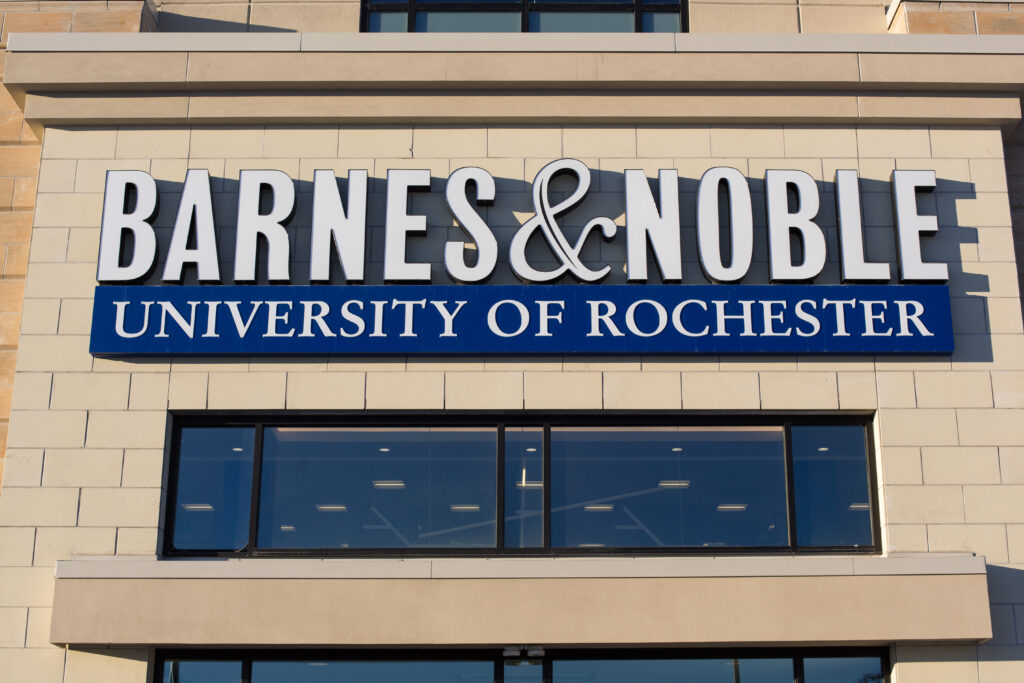
The URochester Bookstore is in College Town. It’s about a 10–20 minute walk from campus or a quick 5-minute ride on the Blue Line shuttle.
This is where students get textbooks through the UR Essentials program. The program covers the full cost of textbooks for fall and spring semesters. If you want to learn more about this program, click here.
The store also offers more than textbooks. Since it’s a Barnes & Noble College Bookstore, you’ll find books, school supplies, dorm items, and UR merchandise. You can also use Rocky Bucks to pay for many of these items.
2. Dewey Hall
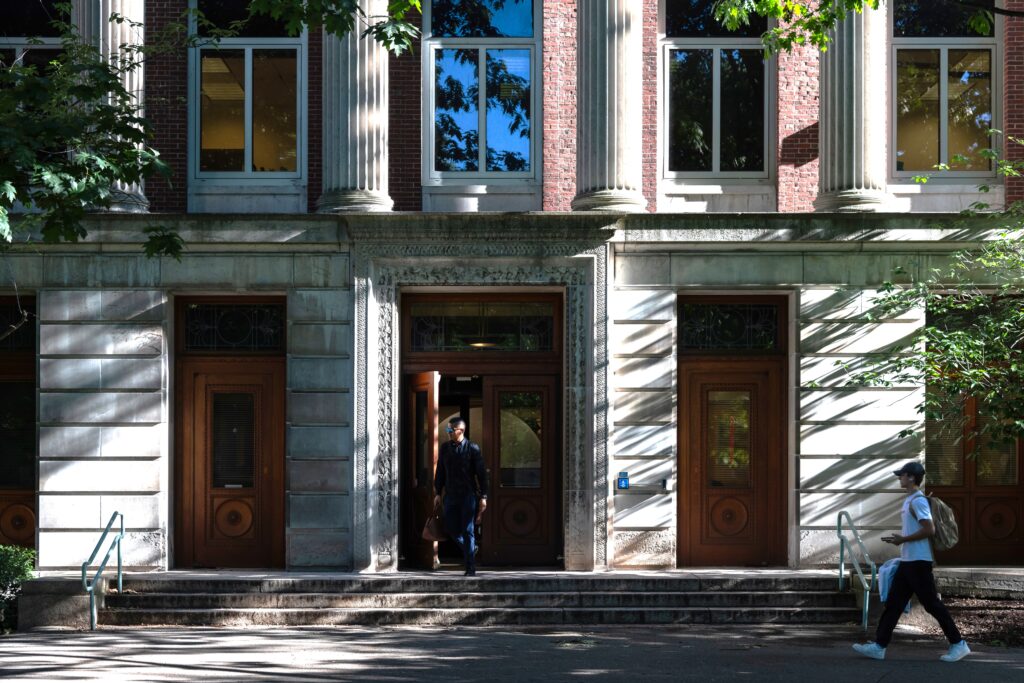
In my opinion, if Meridians were given enough time I will do a full tour of Dewey because I feel like Dewey Hall is like the resource powerhouse building. This building has many resources to support the students here at URochester and they have great staff member willing to help you. Dewey hall includes many offices and resources such as but not limited to The David T. Kearns Center, Center for Education Abroad, Office of Undergraduate Research, Learning Center, Office of Mentoring and Student Advocacy, Student Fellowships Office, and Greene Center for Career Education and Connections.
These are all resources that I know are essential aspects that contribute to their students’ academic, career, and social life in general. Each resource is a hyperlink that will take you to learn about what specific each office does but below will list each one with a brief description below.
- The David T. Kearns Center: The primary focus is supporting first-generation, low-income, and underrepresented students in achieving academic success and pursuing advanced degrees.
- Center for Education Abroad: They are dedicated to helping students access and navigate study abroad opportunities as a core part of their academic experience.
- Office of Undergraduate Research: Help students get involved in researchduring their undergraduate years and guide them in finding and navigating research opportunities.
- Student Fellowship Office: Work collaboratively with students in applying for competitive national and international fellowships, scholarships, and awards for academic and research opportunities.
- Learning Center: Support students’ academic success by helping them develop effective study skills through tutoring, coaching, and collaborative learning resources.
- Office of Mentoring and Student Advocacy: Provides support to students from diverse backgrounds through mentoring, advocacy, and resources that promote their academic, personal, and professional success
- Greene Center for Career Education and Connections: They passionately help students connect their academic experiences to career goals while providing opportunities, summer funding, resources, and guidance for internships, jobs, and future pathways.
There’s much more to Dewey Hall, but I wanted to highlight the offices that have personally supported me and leave it up to you to explore everything else it has to offer. Although we mention many of these resources on tours, I believe it’s always more meaningful to experience them firsthand and meet the staff who bring these spaces to life. They genuinely enjoy connecting with both current and prospective students, which makes a big difference.
3. Lattimore Hall
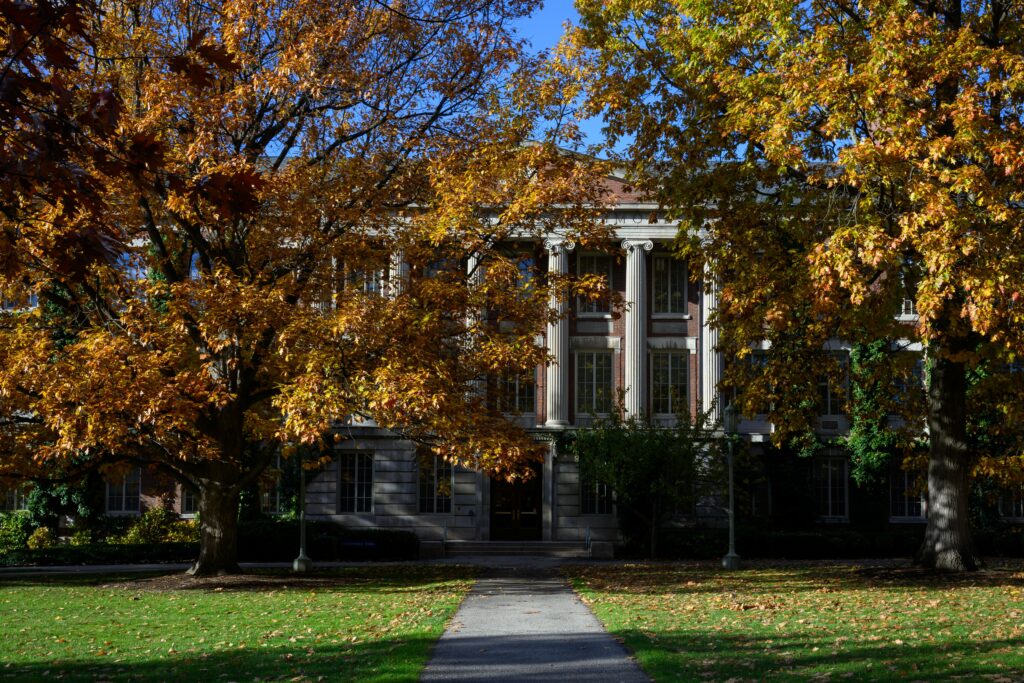
Lattimore Hall is often mentioned on tours, but rarely explored. It houses the deans offices for both the Hajim School of Engineering and the School of Arts and Sciences.
Several important student resources are also located here such as the Center for Advising Services, Office of the University Registrar, and Center for Community Engagement. Below will briefly explain what specifically these offices are all about.
- Center for Community Engagement: Helps connect students and faculty with community-based experiences that integrate academics with real-world issues, supporting learning, personal growth, and civic engagement
- Office of the University Registrar: Provides academic advising and support to undergraduate students, helping them plan their courses, navigate requirements, and make informed decisions throughout their college experience.
- Center for Advising Services: Manages student academic records and oversees key processes such as course registration, transcripts, enrollment and degree verification, academic scheduling, and tracking graduation requirements.
4. The Interfaith Chapel
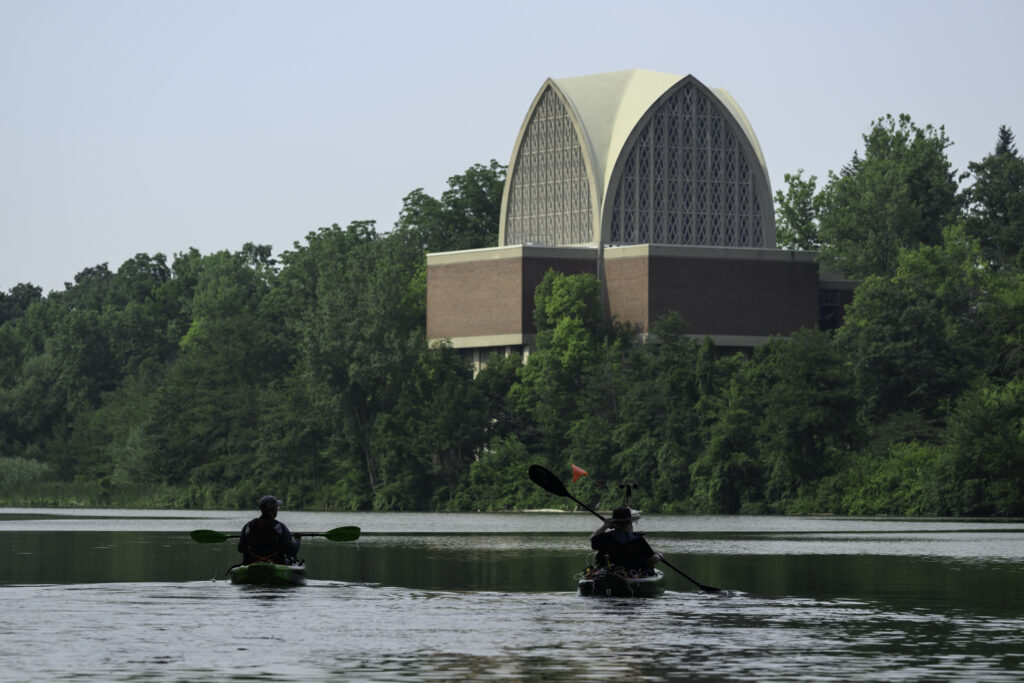
Once again, this is something Meridians always mention on their tour, but it’s never something you really get to see during a tour. The Interfaith Chapel is not only very scenic, but it’s also a place on campus where you can celebrate and practice any religion or faith you may have. It was built in 1970 as a pioneering space, designed at a time when very few universities had a gathering place meant for all religions. So it’s a place that truly welcomes everyone, including those who are spiritual but not religious or not affiliated at all.
It’s also a space where students can connect, build community, engage in dialogue, and explore big questions about their values and identity, while different faiths interact and learn from one another. Lastly, this space isn’t just used for religious or faith practices—it’s also a place that hosts events like lectures, student panels, and other gatherings where people can come together and enjoy time with others.
5. All Dining Options
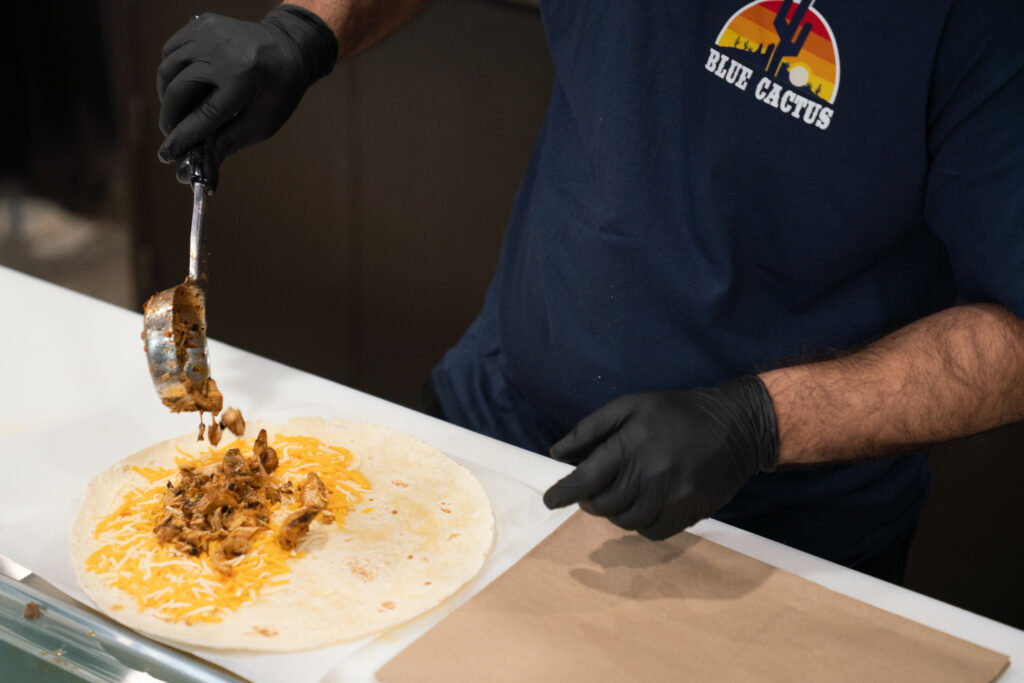
When it comes to food on campus, the University of Rochester offers more than just a typical dining hall experience—it’s a mix of spaces that fit whatever your day looks like.
At the core are the main dining halls (Douglass and Danforth), where you can sit down for full meals with all-you-care-to-eat. These are the go-to spots for breakfast, lunch, and dinner, and they’re included in your meal plan, making them a reliable part of daily student life.
There’s also a lot of variety beyond that. Places such as Blue Cactus, Eastman Dining Center, The Pit, Rocky’s Sub Shop, Starbucks, California Roll, Connections, Peet’s Coffee, The Brew, and Hillside Market. I feel like seeing the variations of food options on campus can help you envision what your time at URochester can be like. Below I will drop brief description of the type of food some of these places have.
- The Pit: Offers a wide variety of foods including grilled items, pizza, global bowls, subs, salads, sushi, and quick grab-and-go options.
- Connections, Peet’s Coffee, and The Brew: These spots mainly serve coffee, tea, and café-style foods like sandwiches, soups, pastries, and baked goods.
- Blue Cactus: Serves Southwest-inspired food such as build-your-own bowls and quesadillas with flavorful toppings and proteins.
- California Roll: Offers freshly made sushi, poke bowls, noodle dishes, soups, and salads.
- Hillside Market: Functions as a convenience-style market with groceries, snacks, drinks, coffee, and grab-and-go sandwiches.
- Rocky’s Sub Shop: Specializes in made-to-order subs using fresh bread with a variety of meats and cheeses.
There are more option beyond this as well but I challenge any future Yellowjackets and prospective students to stop by and try one of our dining option on campus and leave feedback for our staff. Learning more about dining here.
6. Studying Spots
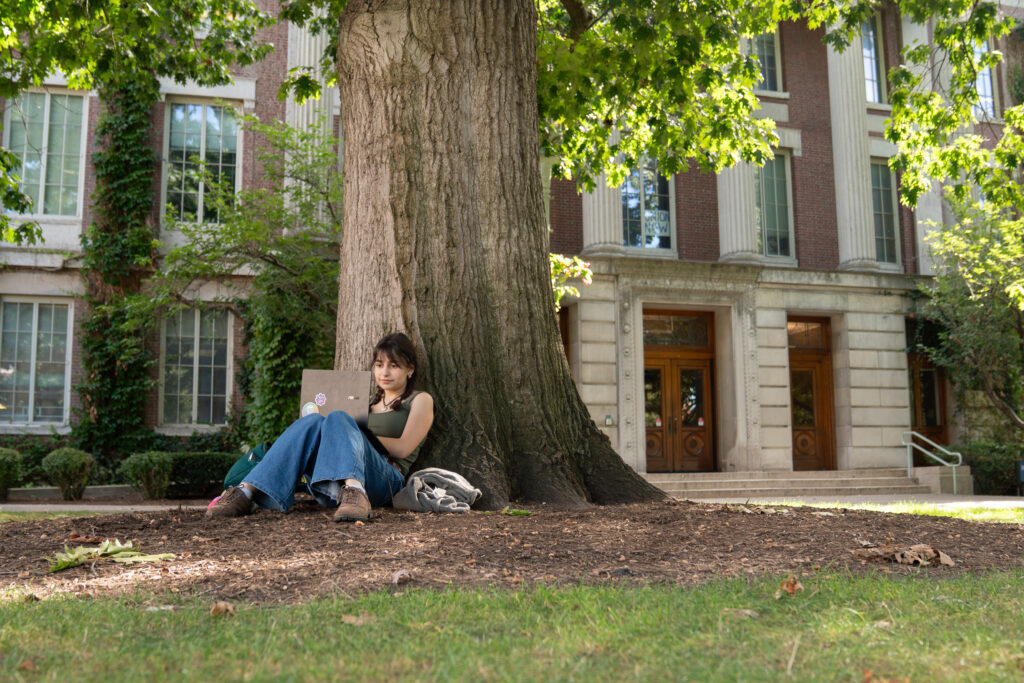
Lastly, something I always find cool is just how many study spots there are across campus. At the University of Rochester, there’s no shortage of places to focus and be productive—whether you’re studying, managing your time, organizing your calendar, or even holding a private meeting. I’ve personally used empty classrooms and conference rooms when they’re not in use, and I’ve seen plenty of others do the same. Many offices around campus are also welcoming and happy to offer a quiet space to work independently.
Here are three spots people often recommend when they need an environment that supports deep focus and productivity. For now, that’s all I’ll share about what tours don’t cover—but I hope this inspires you to explore the undiscovered parts of URochester for yourself.
Explore lots of these places virtually with our virtual campus tour