
Some students spend their weekends catching up on sleep and homework. I spend mine racing from mock trial competitions to club tennis matches, planning strategy sessions in vans, and coordinating practice times across states. Traveling with these teams shows me that collaboration does not just happen during competition. It happens in the shared effort to make everything run smoothly. Those miles taught me how to lead, communicate, and keep a team moving, both literally and figuratively.
From the drives between Washington, D.C., and Cleveland to the late-night hotel prep sessions, every moment on the road becomes a chance to connect with my teammates and sharpen our tournament strategy.
So, what is a typical tournament weekend schedule?
Starting on Friday afternoon, we leave Rochester and begin our journey to the hotel. Oftentimes, we have to travel to places several hours away, so we leave in the early afternoon. We may stop for food as a car group or as a team, depending on when the other cars leave. We will sleep overnight on Friday night, thanks to the school covering travel expenses.
Then, on Saturday, we wake up early and arrive at the tournament, usually about 8 a.m. We compete all day long until around 6 p.m. when we have dinner as a team and prepare for the next. We will sleep overnight again.
On Sunday, we will wake up early and compete. Competitions will usually end around 5-7 p.m., and then we head back to Rochester ready for our Monday classes!
How do you do well in classes and activities?
Although traveling is exciting, it can also be exhausting. Competition weekends often mean leaving early on Friday, spending long hours on the road, and returning late Sunday night. This leaves little time or energy for schoolwork. I have learned that if I want to succeed both academically and in my activities, I have to be intentional with my time. During the week, I work ahead on assignments and plan out my workload. On the road, I use every spare moment. Balancing tournaments with academics has taught me how to prioritize, stay organized, and manage my responsibilities even when my schedule feels overwhelming. It is a skill I have gained that has shaped the way I approach every part of my life.
Where does Club Tennis travel?
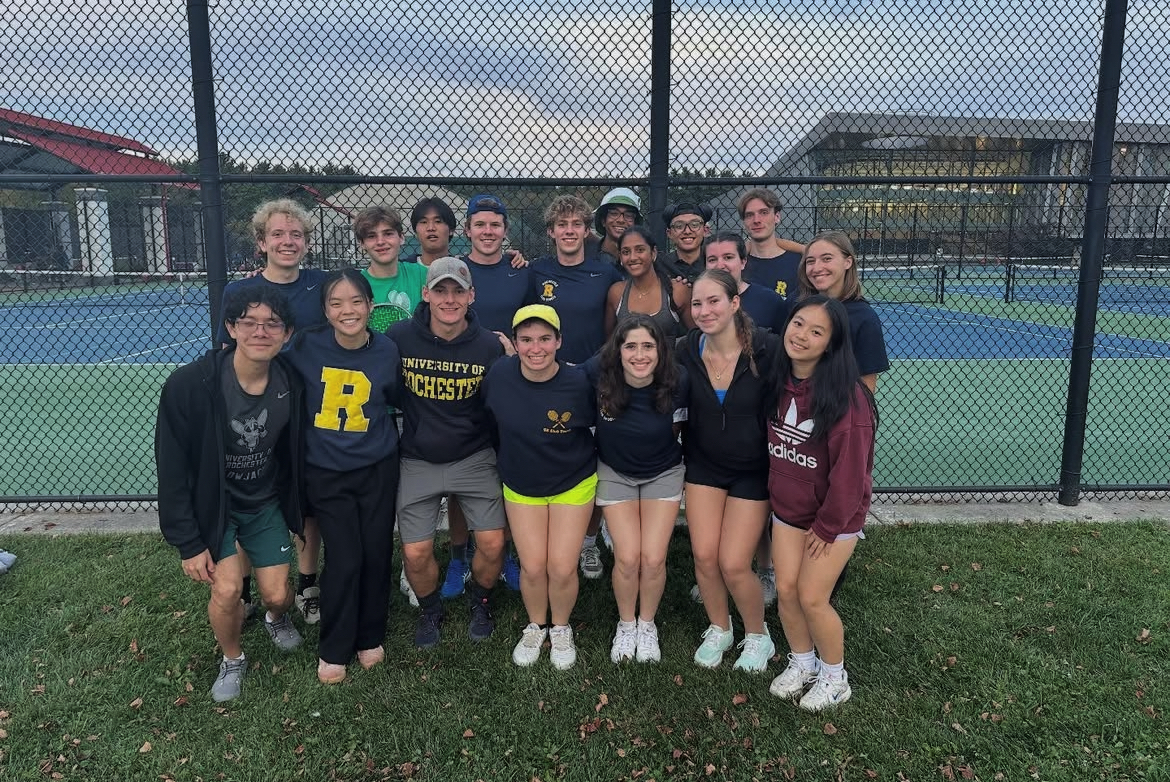
Club Tennis travels every year in the fall to Cortland, NY, for one of our biggest competitions of the year. This competition is a one-day tournament, which decides if we go to Nationals.
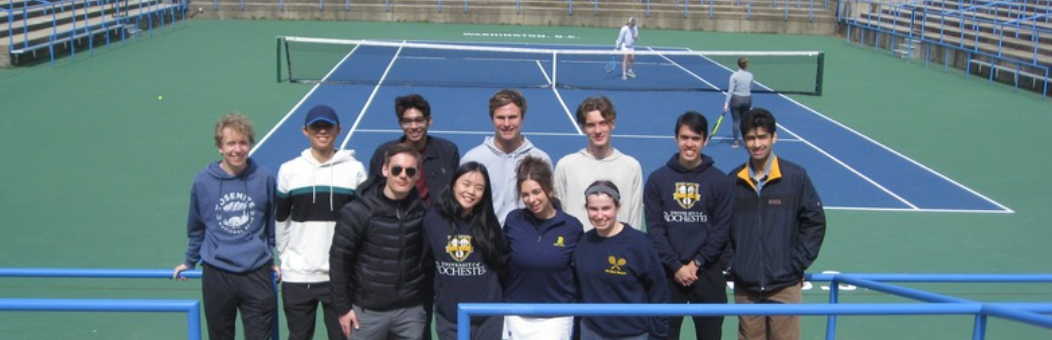
Last year, we attended Georgetown’s Invitational and ended up in the semifinals of the silver bracket against all D1 schools. Although we did well at this tournament, it was also an amazing experience. We played on the CITI Open courts, where a professional-level tournament is held.
We also hold our annual tournament at Midtown Athletic Center, which is about a 20-minute drive from campus. Although we hold our invitational here, we hold several smaller invitationals on campus in the George Athletic Center, which has indoor tennis courts. As one of the few schools in New York that the club team has easy access to court space, we are able to host several smaller tournaments.
Where does Mock Trial travel?
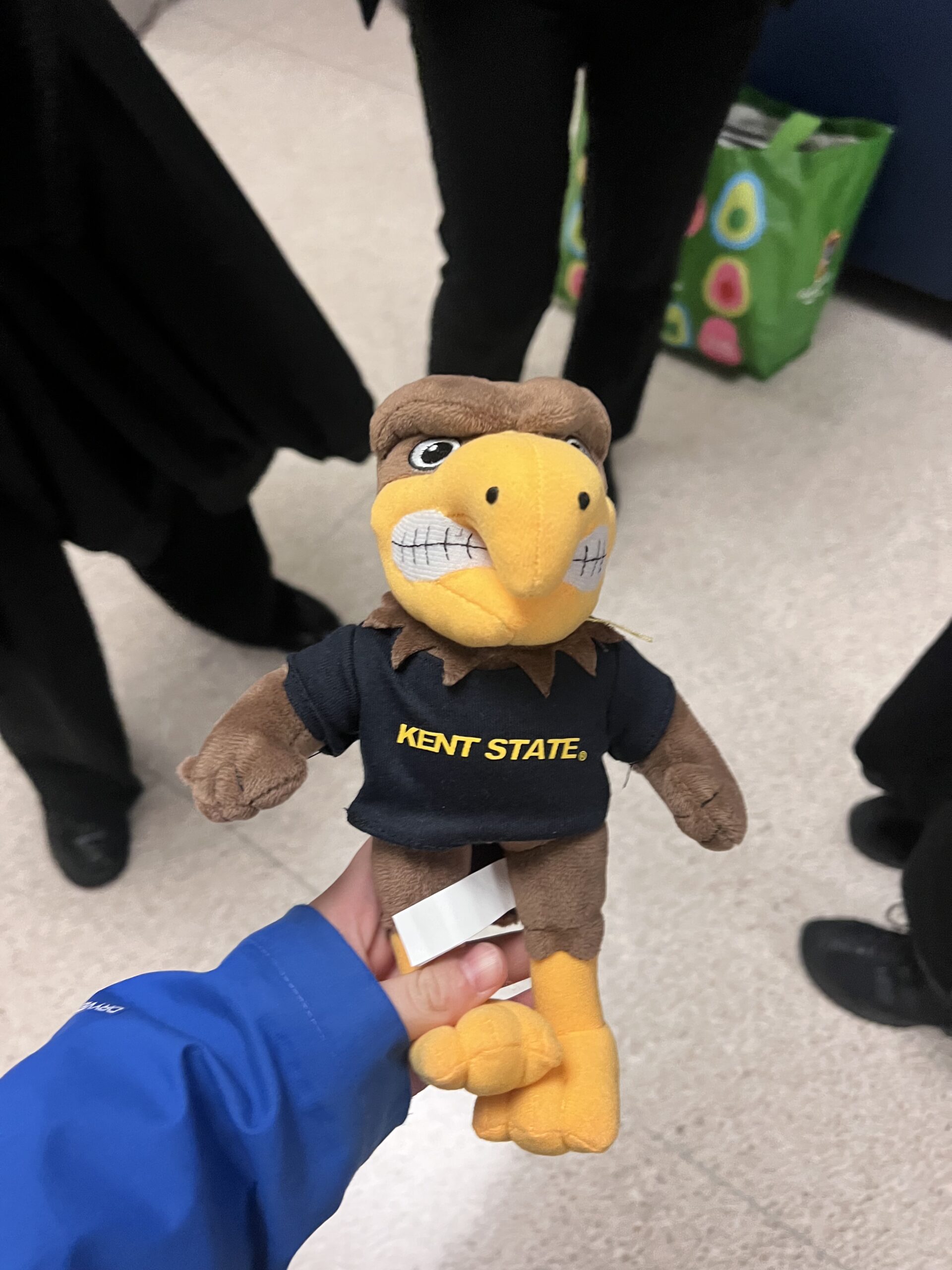
Mock Trial travels a bit more than Club Tennis travels. Each semester I travel about two times per semester for the Mock Trial. In the past years, I have gone to Philadelphia, Boston, Carlisle, PA, and Binghamton, NY. This year, I have gone to Case Western Reserve University and Kent State University, where my team won the Spirit of American Mock Trial Association award, to compete. There are many opportunities to receive awards at competitions, so it is always exciting to celebrate the team and an individual’s accomplishments.
Travel Logistics
Being on the executive board for both of these groups involves me in the travel process. During a tournament, there are always issues and moving parts, which makes it interesting. In addition to leading my team to a successful tournament, I make sure everyone is where they need to be and has what they need to do well. Traveling made leadership real rather than theoretical. It taught me, along with my fellow executive board members, how to guide a team through unpredictability and bring out the best in the people around me.
Team Bonding
What I value most is the community that forms in the spaces between tournaments, the late-night talks in hotel rooms, the shared stress before a big round, the laughter in the car after a long day. The tournaments bring the team together and get everyone excited for the next tournament to do even better. It motivates us to work hard before the next tournament. Traveling has a way of bringing people together. These teams have become my closest friends and biggest support system. The bonds we form on the road make the wins sweeter, the losses easier, and the hours of preparation worth it.
Besides the memories created, what is the benefit of traveling?
I have learned many lessons because of traveling for tournaments. These lessons include travel planning, collaboration, resilience, communication, and time management. All of these skills extend beyond the tournament and can be taught in the classroom. They are the skills I want to bring into my academic work currently and eventually into my career. Traveling taught me that success is built on preparation, adaptability, and community. These are values I carry into everything I do.
Traveling across states for Mock Trial and Club Tennis is something I will always remember from my college experience. Traveling logistics is never a one-person job. It is a collaboration among all executive board members. Most importantly, these experiences have shown me the power of community, the way a team can turn long drives, unfamiliar cities, and high-pressure weekends into opportunities for connection and growth. Whether I am stepping onto a court or into a courtroom, I carry these lessons with me, and they continue to guide how I learn, compete, and show up for others.